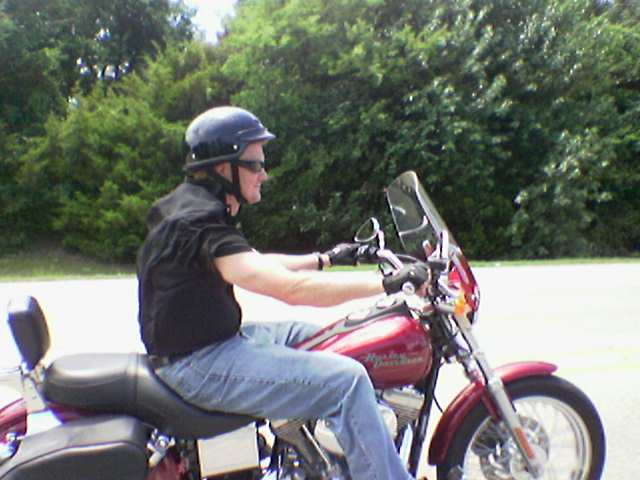
Driving on the Right side
As an American, I have long been of the opinion that we drive on the correct (right-hand) side of the road and that the Brits and their influences have it wrong. Up to now, my opinion has mainly been based on obscure tenets of maritime law, but I have discovered a far better and more important reason, which I will detail below. But first some history, etc. You would expect no less from a geek.
U.S. "Wrongies"
My personal history with this phenomenon comes from having visited England and the U.S. Virgin Islands. Because the virgin islands were once mainly British territory, they drive on the incorrect side of the road, even on the islands of St. Croix, St. Thomas, and St. John, which are now U.S. territories. The most befuddling aspect of this is that the most plentiful cars by far are those made in the U.S.A., because they are cheaper to ship to the islands, and many people who live there are poor and so end up with the lowest-cost option. So, on a recent trip to the U.S. Virgin Islands, I found myself hurtling down the single-lane roads keeping to the left, but sitting in the left-hand driver seat as far as possible from the parts of the cars which are nearest each other. This might sound safe, but it really isn't because it's really hard to see the line in the middle of the road.
World Driving History
The phenomenon of standard driving sides far predates cars. Originally, it was the swordsmen gentlemen of England who decided to ride horses on the left, so that their scabbards wouldn't clank together and so that their strong right arm could pull the sword out and oppose enemies riding at them on the same road. Why they thought their enemies would be so orderly is partly explained by the way they fought wars back then. Anyway, Europe under Napoleon decided they wanted to ride on the left side of wagons so they could whip the team with their right hand, and for similar reasons described above, wanted to pass on the right. Britain whipped Napoleon, so his driving habits never spread there, and neither did Hitler's.
Maritime Law
This is all well and good, but long before Napoleon and long before other driving habits were established stateside, England herself had already decided the question in the 1100's. Admiralty law, also known as Maritime Law, has always called for seagoing vessels to pass one another on the right. And no one had more stake in creating Admiralty Law than the British. Now, the British can claim one side or the other all they like, but as long as they are not consistent, I don't see any point in following them at all. Of course, to most people, this is a kind of esoteric argument and doesn't hold much water, so to speak. Why should we listen to the British at all, maritime or otherwise? This is America, damn it, and we won our independence from the crown hundreds of years ago (in fact that is around the time that it was settled once and for all that Americans would pass on the right). It is only by a stroke of luck that we and Napoleon got it right. We were also on more or less the same side in the war, so what the heck, we're also on the same side of the road. Besides, we invented the car, so we get to choose. Or at least we invented the assembly line to make enough of them that it mattered which side you drove on.
But... But... I don't drive
The real reason you should drive on the right is far more practical, and affects you every day, even if you don't drive at all. Namely, when a people drive on a certain side of the road, they tend to pass one another on walkways on that same side. This makes sense, because it is useful to have a side to pass on, after all. In England, they would take this back to the "orderly enemies" argument above, and say that in walking we should keep our weapon hands on the side of the "enemy" on the other side of the road. Well, if your a warmonger that is all well and good, but most of us just walk up a couple of flights of stairs every day and go to work, not to war. And that is where we need our right hand, to hold onto the railing, whether we are ascending or descending, and thus the practical reason to drive on the right.
For the record, I'm left-handed.
Friday, November 30, 2007
Driving on the wrong side - settled at last

Wednesday, September 12, 2007
Security Exploit for your Car
Car security
I have talked a bit about cars and technology here before, particularly security. I think this is an issue which deserves some attention, but nonetheless I will post about it here rather than forward an e-mail to everyone I know telling them to forward it in turn. That has its own security risks, which I will explain in a later post. This article explains how I discovered a security hole for the automatic remote for some cars, and how to avoid it. This is on a slightly older car, but this exploit can be gleaned from a simple reading of the car owner's manual without any special technical knowledge or equipment, just a sneaky mind like mine, and one's own keyless entry. Your mileage may vary, as they say. You should read your own owner's manual with a mind toward something similar. More on that later.
Security attempts
Over time, car manufacturers have taken on the issue of keyless entry security. Early transmitters simply sent a digital sequence to the receiver in the car, matched to that receiver. The problem with this was that criminals could simply sit in a parking lot and record the sequences on their own receiver, and play them back to open the doors. This particular exploit required special equipment, and so was a specialized type of threat, but a real one nonetheless. To correct for this, manufacturers began coding the transmitters to the receivers but with special encryption algorithms built into both, with two-way communication, so that a different code was sent each time.
The exploit
In the particular case of my car, a Chrysler Sebring, this fix for a relatively rare problem created a much more common and exploitable problem. The transmitter is matched to the car at the factory, but it has some kind of internal limitation on how many new unique codes can be generated without communication. According to the owner's manual, if the keyless entry is keyed "more than 250 times" when not within range of the car, this pairing is lost. I suspect they really mean more than 255 times, but that's a nit. Anyway, since there is a way the customer can lose the pairing, there has to be a way to resync. The way to resync, on my car, is simply this: Lock the doors (using the door-lock switch on the door, of course, because your remote doesn't work), then press the buttons on the remote in a particular way (which I will skip here to maintain a little security through obscurity). The remote resyncs and then can be used to unlock the door again.
Oops
If you haven't figured out the exploit by now, it is simply that if the owner of the car has locked his doors with the door-lock switch, any schmoe with the same remote can then press the appropriate sequence on his remote and get into the car. The key will still not fit, so they can't steal your car, but at least they can steal all your CD's and sunglasses. Up until I realized this, I locked my door this way all the time, because it's easier to flip the lever on the door than to fiddle around with the remote. Luckily, I discovered this exploit not by being victimized but because I had a remote that didn't work even after replacing the batteries, and it said on the remote "consult the owner's manual." I tried it on my dad's car, which is the same but a newer year, and sure enough it works.
Keeping out interlopers
The solution is simple, of course. Just lock your doors with the keyless remote always. This will also ensure that you don't lock your keys in the car, which is good.
Other cars
Your car may differ in the way that it resets the keyless entry. For example, some require that the key is in the ignition to initiate the sequence. In this case you are safe from this exploit, but there may be other ones depending on your car. Read your owner's manual, and if you find another exploit for your car, post it below.
Tuesday, June 19, 2007
Car buried in vault in Tulsa, OK in 1957, opened in 2007 - rusted junk(pic)
There was a contest in 1957 to guess what the population of Tulsa would be by 2007, its centennial. The winner gets an unused 1957 Belvedere plus the contents of the car, which included a ladies purse with typical items, including Valium and bobby pins. However, when they finally dug up the mess last week, it turned out the vault was full of water.
read more | digg story
Friday, March 30, 2007
How to find your gas cap without getting out of the car

When you pull in to a gas station, especially in an unfamiliar car, you are often stuck with making a decision about which side of the car needs to be adjacent to the pump, before you get out of the car. It's a fifty-fifty shot, but if you get it wrong, you have to start the car back up and make an awkward maneuver to get to the other side of the pump, disturbing all the other people who are trying to get gas for their cars. If it's especially busy, you might miss it altogether.
Since I like to blog about how-to things, this is going to be in that category, I suppose. My boss just got a new Lexus LS 460 with all the bells and whistles such as bluetooth to link to your cell phone, built-in navigation and calendar which presumably syncs with your phone calendar, and more (it can literally parallel-park itself), but she was wondering which side the gas fill was on, so I pointed out something that I've know for a while, but not everyone knows. I think they should teach it in driver's ed. Anyway, on your fuel gague inside the car, there is an icon of a gas pump. That icon serves a dual purpose. First, it tells you that the meter you are looking at is indeed the fuel indicator, but it also tells you which side of the car the fuel filler is. There will usually be an arrow, such as this:

but also it might just be on a certain side of the gague, which is still an indication:

In both of these cases, obviously, you want the gas pump on the left side as you pull in, because the cap is on the left side of the car. This has been a part of most cars since at least the early nineties, so you can guess that it is probably true of your car too. I haven't looked back at older cars to see if it is true for them too, so tell me in the comments what is the oldest car for which this works, and the newest car for which it does not work.